
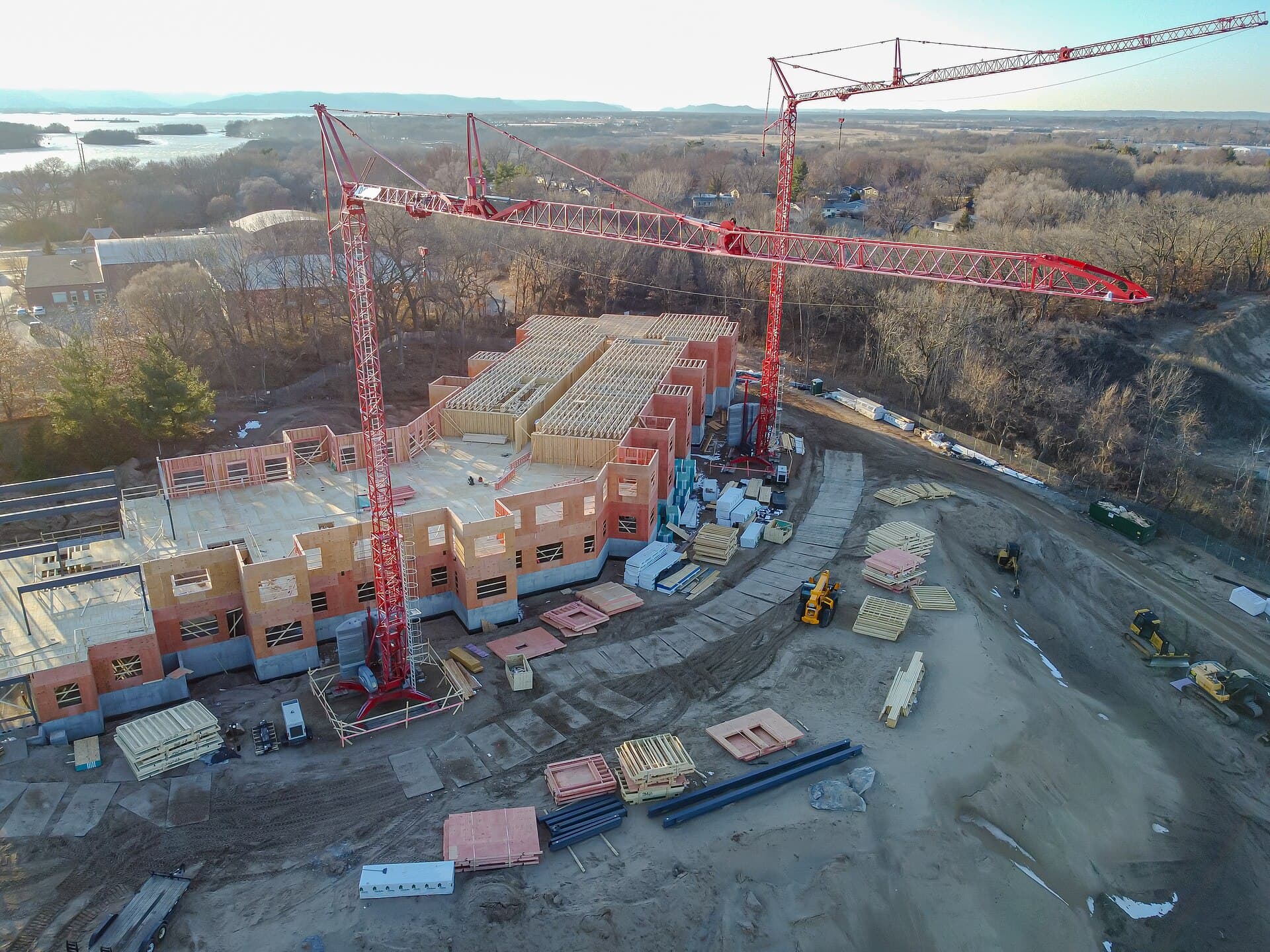
Construction
Progress against programme, earthworks quantities, installation quality and safety observations, captured routinely rather than argued about monthly.
Everyone on site is measuring, and none of it agrees
The contractor measures progress for the claim, the quantity surveyor measures volumes for the valuation, the engineer measures quality for the sign-off, and the client's monthly report is assembled from all three, weeks later. They are measuring the same site with different instruments on different days, so the meeting becomes an argument about whose number is right instead of a decision about what to do.
Four failure modes, and what each one costs you late
Construction is the sector where the expensive failure is almost never the defect. It is the six weeks between the defect happening and anybody being able to prove it.
Programme slippage
- How it shows
- A discipline falling behind between one capture and the next
- What it costs late
- Compounds. Found at month end it has already been built on top of
- What catches it
- Progress measured per discipline from the model and compared week to week
Earthworks variance
- How it shows
- Cut or fill diverging from the design surface
- What it costs late
- Disputed quantities, and a claim argued from two spreadsheets
- What catches it
- Volumes computed from the surface against design and against the pre-works baseline
Installation defects
- How it shows
- Setout drift, misaligned rows, wrong components
- What it costs late
- Cheap while accessible, a rework package once covered
- What catches it
- Installation compared with the design record while the work is still exposed
Unsafe conditions
- How it shows
- Missing edge protection, unsafe access, stockpiles blocking routes
- What it costs late
- The one where the cost is not financial
- What catches it
- Surfaced from capture you were taking anyway, for a person to judge
Severity here is how we rank the class by default, not a judgement about your site. Every threshold is set per deployment, and a mode you consider routine can be dropped down the ranking on day one.
Six things the layer runs on an active site
One capture a week, and these six run off it. None of them requires the contractor to file anything.
Measure progress per discipline
Percentage complete computed from the model and compared against last week's capture, so the trend is measured rather than asserted in a meeting.
Compute earthworks volumes
Cut, fill and placed quantities from the surface, against the design and against the baseline taken before anything moved.
Check installation against design
Setout, alignment and components compared with the design record while the work is still exposed and still cheap to correct.
Hold the pre-works baseline
The ground as it was, versioned and dated. Every quantity argument for the life of the project is settled against it.
Raise variances in the week
A variance goes to the site manager with the two captures it was measured from, in the week it appeared rather than at month end.
Build the handover pack as you go
Everything captured during the build is already attached to assets, so commissioning becomes verification rather than assembly.
An earthworks variance argued from the ground, not a spreadsheet
The measured surface, the design surface and the pre-works baseline are all versions of the same object, so a quantity dispute becomes a comparison rather than a negotiation.
Cut volume diverging from design
Zone A · platform 2
- design
- 38,400 m³
- measured
- 41,120 m³
- variance
- +7.1%
- captured
- 12 Mar
Raised against the design surface, with both attached
The measured surface, the design surface and the pre-works baseline are attached, so the conversation is about which one is wrong rather than about whose spreadsheet.
Identifiers, volumes and dates are illustrative.
How a construction deployment starts, and then repeats
Fastest sector to stand up, because there is usually no control system to integrate with and no energised asset to work around.
Agree the capture plan
Airspace, site permissions and the weekly window, agreed with the contractor up front. The method being agreed by both sides is what makes the measurement useful later.
Capture before the first machine
The ground as found, plus the asset hierarchy. If groundbreaking has happened we still capture, and record the baseline as as-found rather than as-was.
Fly weekly
One pass a week during active works, more often through fast earthworks, less once the structure is enclosed. Progress, volumes and exceptions come from the same flight.
Widen into the reporting
Teams usually start with capture only, then let the measurement feed the monthly report, then let variances raise themselves. That order is deliberate and it is yours to set.
What lands on your side each week
Written for the three people who currently measure the same site differently: the contractor, the quantity surveyor and the client.
Weekly site model
The whole site captured, versioned and dated, so any week of the build can be looked at again years later.
Web viewer · GeoTIFF
Progress per discipline
Percentage complete measured against your imported programme, week over week.
CSV · API
Earthworks quantities
Cut, fill and placed volumes against design and against the pre-works baseline.
CSV · report
Quality exceptions
Setout and installation differences against the design record, with the capture attached.
O-OPS · RFI
Safety observations
Edge protection, access and stockpile conditions surfaced from imagery you were taking anyway.
CSV · O-OPS
Handover evidence
Everything captured during the build, already attached to assets and ready for commissioning.
Bundle · open formats
The weekly record is what makes the rest of it work. A dated capture of every week of the build is the thing you cannot reconstruct later, and it is the cheapest part of this to buy.
How often, and what for
Weekly is the cadence a programme moves at. Sites with fast earthworks want more early on and less once the structure is up.
- Whole siteTypical cadenceWeekly during active worksWhat the pass looks forProgress per discipline, logistics, laydown and accessReferenceISO 19650
- EarthworksTypical cadenceWeekly while movingWhat the pass looks forCut and fill volumes against design and baselineReferenceSurvey spec
- Structure and installationTypical cadenceWeekly, while accessibleWhat the pass looks forSetout, alignment, component verification against designReferenceISO 19650
- Safety conditionsTypical cadenceEvery captureWhat the pass looks forEdge protection, access routes, stockpile placementReferenceSite rules
These intervals are the starting points the standards describe, not a measured result of ours. Insurers, warranty terms and your own history will move them, and the point of planning from condition is that the interval stops being the thing that decides.
Three modules, during the build
There is no live telemetry to corroborate against until the plant is energised, so this is the one sector where the layer runs with three rather than four.
Detect
Flies the weekly pass and measures progress, quantities and installation against the design record.
Leaves behind
A dated, versioned capture of every week of the build, measured against design.
Operations
Holds the programme, the design surfaces, the quality record and the work already raised.
Leaves behind
The programme, design surfaces, quality record and the work already raised.
Decide & act
Compares the capture against the programme and raises variances in the week they appear.
Leaves behind
The weekly comparison, the variance, and the record of what it was measured from.
- 01O-EYEDetectInspection & digital twin
- 02O-ARCAnalyseSensors, IoT & telemetry
- 03O-OPSOperationsThe system of record
- 04actsO-AGENTDecide & actThe agentic layer
Every action writes back to the record, so the model sharpens with every job.
Questions from this sector
Who owns the measurement, us or the contractor?
You do, and that is usually the point of buying it. The method should still be agreed with the contractor up front: a measurement both sides can see is a shorter argument than two sets of photographs.
Does this work on vertical build or only civils?
Both, with a caveat worth stating rather than burying. Aerial capture measures external and exposed work. Once floors are enclosed, interior progress comes from your own checklists and photographs, held in the same record.
How quickly do we get numbers after a flight?
Same day for progress and quantities on a typical site. Processing scales with area and the fidelity you asked for, so we would rather quote against your site than print a turnaround that assumes a small one.
Can it replace our monthly progress report?
It can produce most of what goes into it, weekly rather than monthly, with evidence attached. Whether it replaces the report is a contractual question between you and your contractor rather than a product one.