
Water and wastewater
Condition across treatment works, pumping stations and buried network, tied to the consent you are actually judged against rather than to an asset list.
The asset you are judged on is the one nobody can see
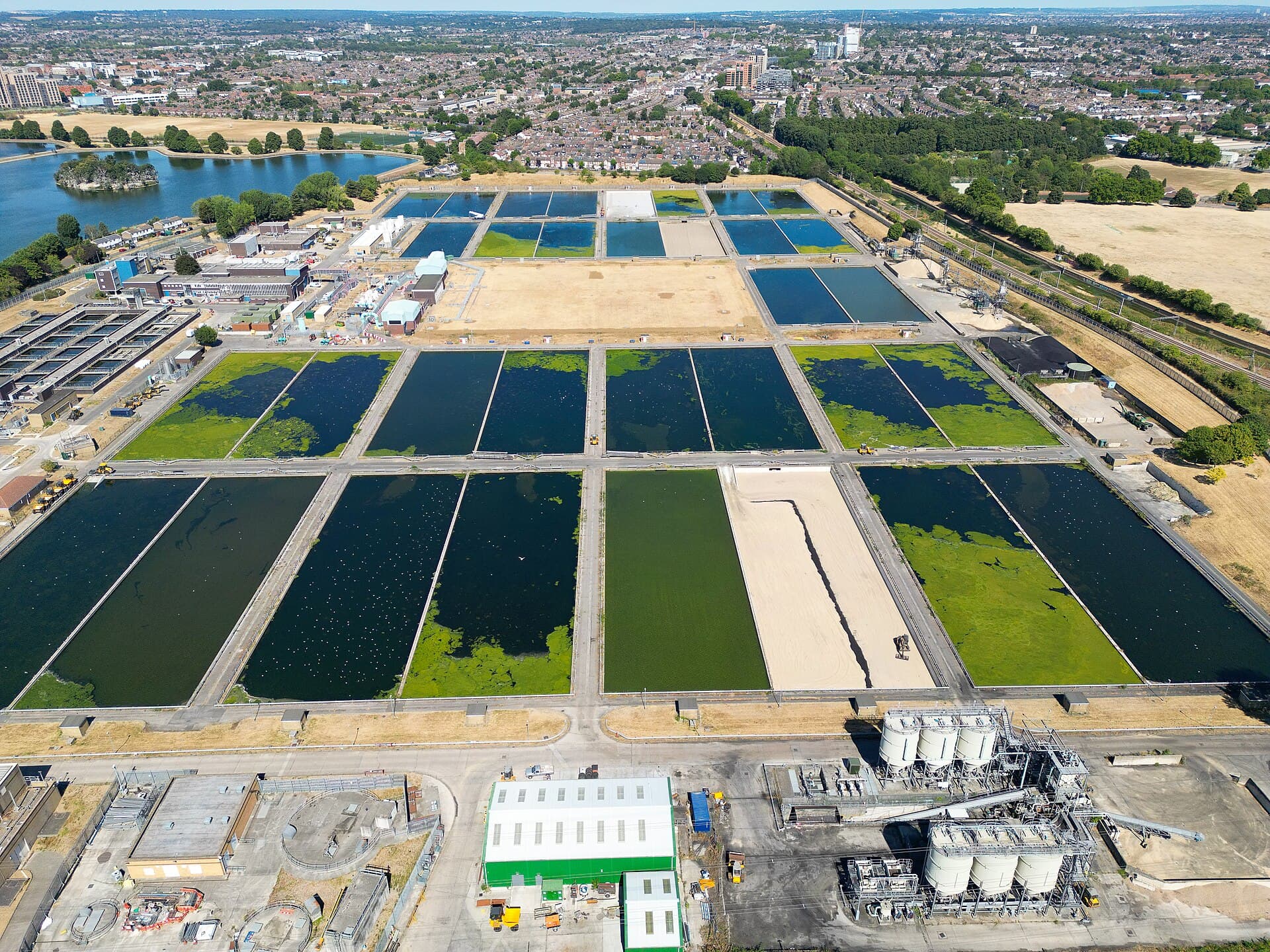
A water business is measured on two numbers it does not directly control: what leaves the outfall and what leaks out of the ground. Both are produced by thousands of assets, most of them buried, several of them older than the company that owns them. The works themselves are well instrumented and poorly recorded — the SCADA system knows the turbidity on tank three and has no idea when tank three was last desludged, who did it, or that the bridge drive was replaced two years ago. So the process data says something is wrong and the maintenance history that would say why lives somewhere else entirely.
Four failure modes, and what each one costs you late
The first two end in a regulatory event and the second two end in a number you have to explain to a regulator. None of them announce themselves on the day they start.
Drift toward a consent breach
- How it shows
- Effluent quality trending at the limit while every alarm stays silent
- What it costs late
- A permit breach is a regulatory event with a reporting duty, not a maintenance job
- What catches it
- Process trend read against the other streams on the same works, with the maintenance history attached to the tank
Pump, blower and motor failure
- How it shows
- Rising bearing temperature, current drawn drifting from the curve, cavitation
- What it costs late
- A pumping station that fails in storm flow spills, and spills are counted
- What catches it
- Thermal survey and drive telemetry against the asset rather than against a tag name
Concrete and steelwork deterioration
- How it shows
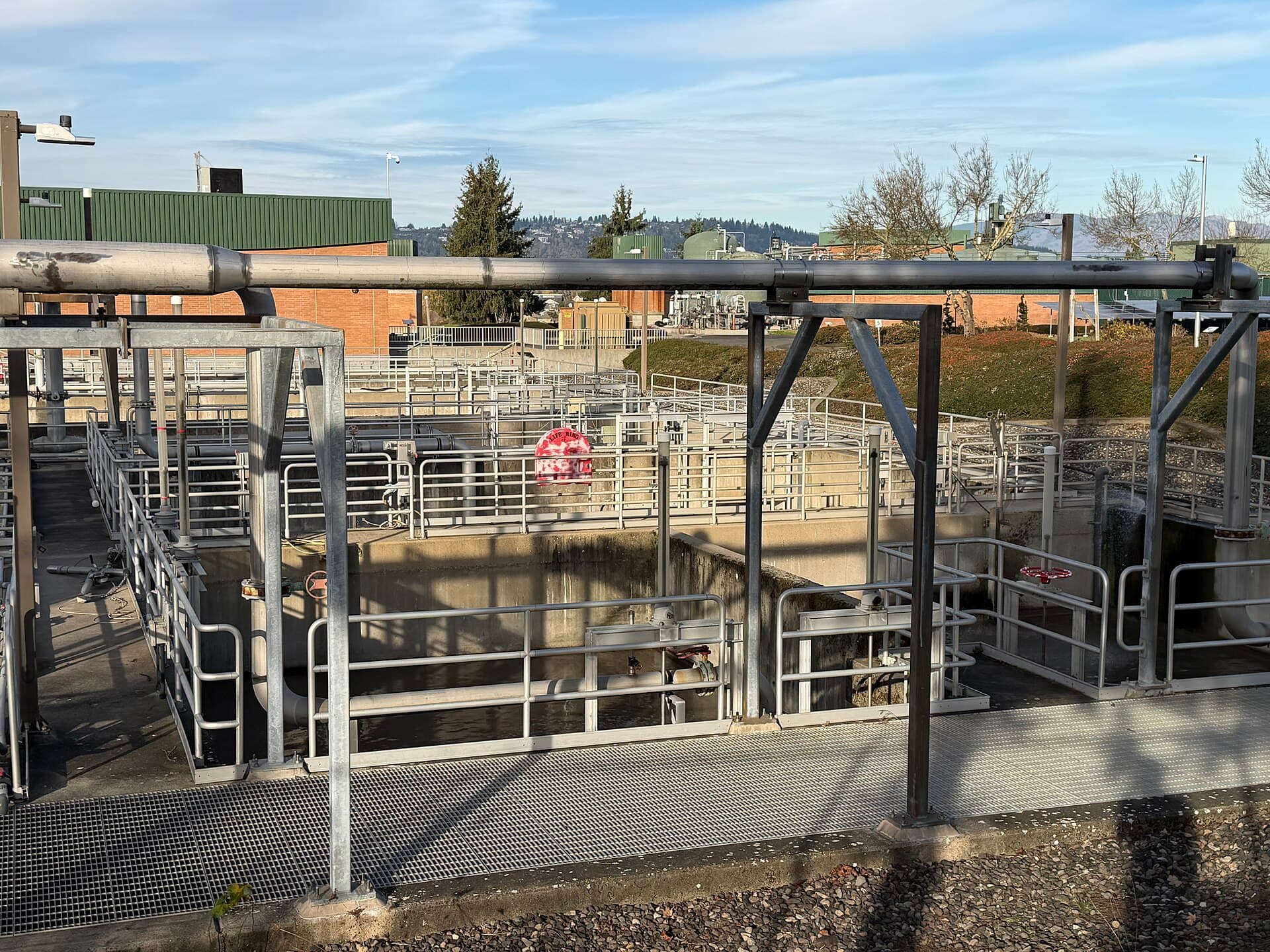
- Spalling to tank walls and channels, corrosion to bridges, handrails and walkways
- What it costs late
- A structural repair found late is an outage on a works that cannot be taken offline
- What catches it
- Aerial capture of tank decks and walkways nobody safely walks each quarter
Network leakage and loss
- How it shows
- Night flow rising in a district, surface signs a long way from the actual break
- What it costs late
- Leakage targets are regulated, and the water lost was paid for twice
- What catches it
- Flow and pressure read per district, with repair history so a repeat is visible as a pattern
Severity here is how we rank the class by default, not a judgement about your site. Every threshold is set per deployment, and a mode you consider routine can be dropped down the ranking on day one.
Six functions, on your works
Everything above is your problem. These six are ours: what the layer actually does to a treatment works and the network hanging off it.
Survey the works from the air
Tank decks, channels, walkways, bridges and roofs on a quarterly pass, including the parts nobody walks because getting to them needs a permit and two people.
Read each stream against its peers
Four settlement tanks on one inlet should behave the same way. Reading one against the other three separates a fault on an asset from a storm on the works.
Rank by consent headroom
Severity alone puts a corroded handrail above a tank quietly eating its margin. Ranking against how much room is left before the permit limit puts them in the right order.
Watch the network by district
Night flow, pressure and repair history per district metered area, so a district that keeps failing is a pattern rather than a run of unrelated jobs.
Hold the structural record
Concrete and steelwork condition versioned pass over pass, so spalling that has moved in six months is visible as movement rather than as a photograph.
Produce the regulatory pack
Finding, frame, process trend, work order and sign-off exported together with their timestamps, in the shape an auditor asks for.
A settlement tank drifting, three weeks before it breaches
The interesting version of this is not the alarm. It is the six weeks before the alarm, when the tank is still inside consent and the fix is still a scheduled desludge rather than a regulatory event.
Blanket carryover on final settlement tank 3
Eastern WwTW · FST 3
- surface
- Carryover, 40% of tank
- confidence
- 0.91
- last desludge
- 14 days overdue
- consent headroom
- 31%
Desludge pulled forward into this week
Well inside the autonomy limit: this is a routine job moved earlier, not a process change. What makes it worth doing is that nobody had to notice first.
Identifiers and values are illustrative.
From one works to the region
It starts on a single works because that is where the join can be proved cheaply, and widens only once the register holds.
Connect the process system
Read-only from the SCADA system or historian on one works, plus the district meters. Nothing is written back until you ask for it.
Fly the baseline
One full pass over the works. Every tank, channel, deck and roof becomes an asset with a photograph and a date attached, which for many sites is the first complete condition record they have.
Run the cadence
Quarterly passes, continuous process reading, and drift called against peers. The second pass is where the value starts, because it is the first one with something to compare against.
Widen across the region
The naming and the classes are already set. Adding the ninth works is a configuration change, not a project.
Six things that land on your side
Artefacts, not access. Everything here exists in your systems and your formats whether or not anybody opens ours.
Works condition survey
Every tank, channel, walkway and roof on the site with condition, date and the frame it was assessed from.
PDF · GeoTIFF
Thermal report on rotating plant
Pumps, blowers and panels with delta T against load at capture, so a reading has a context.
PDF · CSV
Ranked action list
Ordered by consent headroom and structural consequence rather than by severity label alone.
CSV · O-OPS
District leakage view
Night flow and pressure against repair history per district metered area.
CSV · dashboard
Change over time
Pass against pass on the same asset, so deterioration is a rate rather than an opinion.
Web · PDF
Regulatory evidence pack
Findings, frames, process trends, jobs and sign-offs exported together with timestamps intact.
PDF · ZIP
Formats are the common case; the exact shape is agreed per deployment.
How often, and what for
A works can be flown far more often than it can be walked, which is the whole reason the interval moves. The buried network is the opposite: it is monitored continuously and surveyed only on exception.
- Treatment worksTypical cadenceQuarterly aerial, annual full surveyWhat the pass looks forTank and channel condition, walkway and handrail corrosion, blanket and weed, accessReferenceISO 55001
- Buried networkTypical cadenceContinuous monitoring, survey on exceptionWhat the pass looks forDistrict night flow, pressure transients, surface signs of lossReferenceEN 752
- Service reservoirsTypical cadenceAnnually, plus after severe weatherWhat the pass looks forRoof and membrane condition, ventilation, embankment, standing water, securityReferenceWater quality regulations
- Pumping stationsTypical cadenceThermal twice a yearWhat the pass looks forMotor, bearing and panel hotspots, wet well condition, screen blindingReferenceManufacturer
These intervals are the starting points the standards describe, not a measured result of ours. Insurers, warranty terms and your own history will move them, and the point of planning from condition is that the interval stops being the thing that decides.
Four modules, one works
The works is instrumented already. What is missing is that nothing joins the reading to the asset that produced it, or to the last person who worked on that asset.
Detect
Flies the works and the reservoirs, and classifies what it finds against the asset rather than the site.
Leaves behind
Located, classified condition findings on tanks, decks, walkways and roofs
Analyse
Connects to the process control system, flow monitors and district meters, and resolves every tag onto a component.
Leaves behind
Process and flow history readable per asset, with drift called before an alarm
Operations
Holds the asset register, the maintenance history, the consent conditions and the evidence.
Leaves behind
The work order, the desludge record and the trail a regulator asks for
Decide & act
Reads the three together, ranks by consent headroom rather than by severity alone, and raises the work.
Leaves behind
Scheduled jobs and escalations, each with the reason it was raised attached
- 01O-EYEDetectInspection & digital twin
- 02O-ARCAnalyseSensors, IoT & telemetry
- 03O-OPSOperationsThe system of record
- 04actsO-AGENTDecide & actThe agentic layer
Every action writes back to the record, so the model sharpens with every job.
Questions
Can you fly a working treatment works?
Yes, and it is one of the easier sites to fly: fixed boundary, known airspace, no public access. The pass is planned so that it does not overfly occupied buildings or the site entrance, and it does not need the works to be taken out of service.
We already have telemetry on everything. What does O-ARC add?
It adds the join. Your historian knows a turbidity value against a tag name. It does not know that the tag belongs to FST 3, that FST 3 had its bridge drive replaced last year, or that the same reading on FST 1 would mean something different. Binding the tag to the asset is the work.
How does this help with leakage, when the pipe is buried?
It does not see through the ground, and nothing does. What it does is read district flow and pressure against repair history per district, so a district that keeps producing repairs is visible as a pattern rather than as a run of separate jobs.
Does the evidence stand up for a regulatory submission?
The finding, the frame it came from, the process trend at the time, the job it raised and the sign-off export together with their timestamps. That is the form an auditor asks for. Whether a given regulator accepts it is a conversation with that regulator, and we will have it with you.