
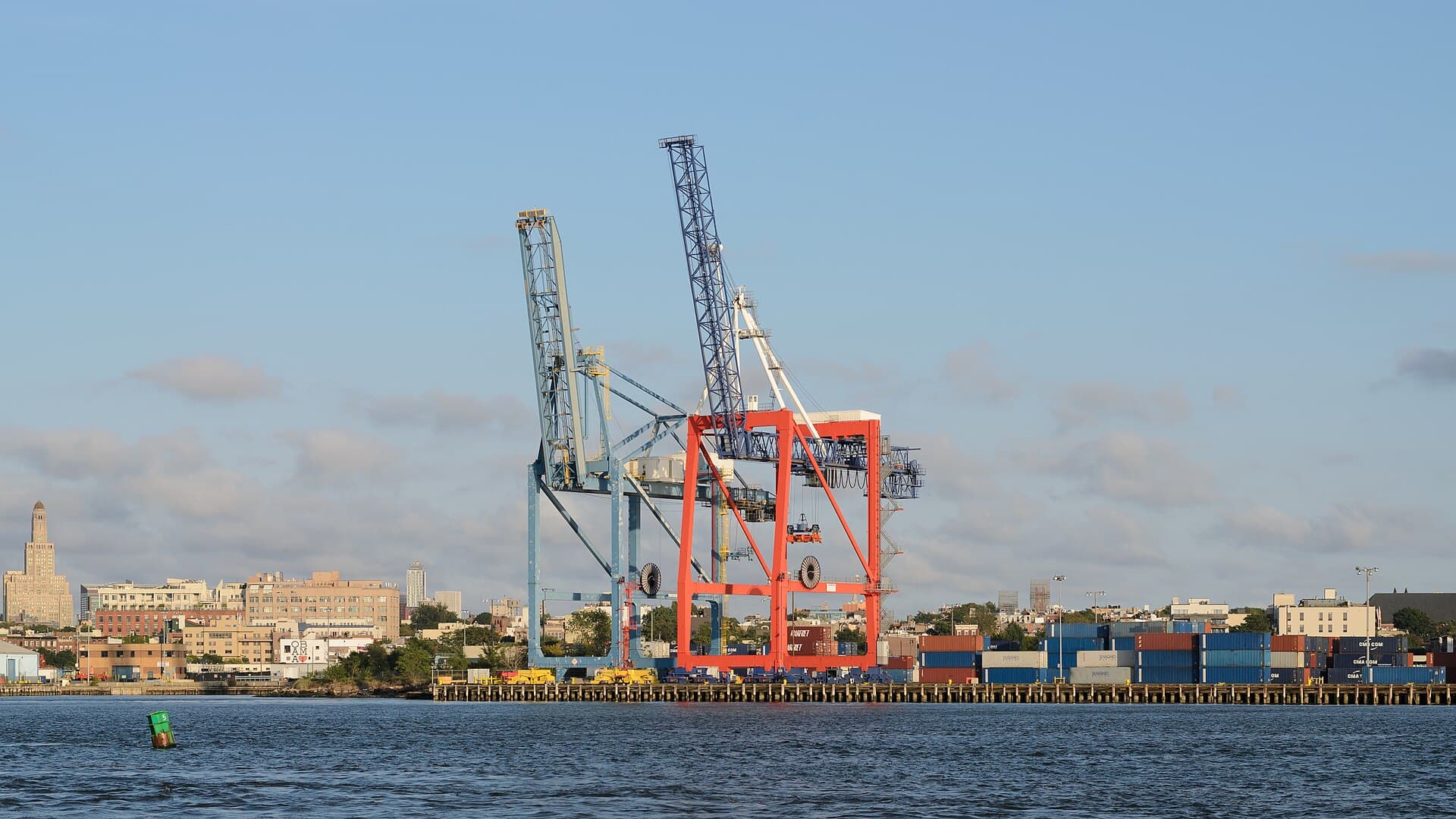
Ports and terminals
Quay walls, cranes and yard structures inspected without closing a berth, with findings routed straight into the maintenance backlog.
You cannot close the asset to inspect it
A quay, a crane rail and a running line share one problem: the inspection window is whatever gap the operation leaves, and the operation does not want to leave one. So structural inspection happens on a long cycle, condition gets judged from what can be seen from a walkway, and the parts that matter most are the parts hardest to reach.
Four failure modes, and what each one costs you late
Every one of these is a structure that fails slowly and then all at once, on an asset that cannot be taken out of service to look at it.
Quay wall and berth structure
- How it shows
- Spalling, reinforcement corrosion, scour at the toe, tie-rod condition
- What it costs late
- Structural, expensive, and found late because divers and closures are expensive
- What catches it
- Capture above the waterline at structure resolution, versioned so deterioration becomes a trend
Crane structure and rails
- How it shows
- Fatigue cracking at connections, rail wear and alignment, coating failure
- What it costs late
- A crane out of service takes the berth with it
- What catches it
- Capture from above and alongside without stopping the operation for a survey
Fender and mooring failure
- How it shows
- Fender panel and chain damage, bollard and quick-release hook corrosion, missing fixings
- What it costs late
- A berth taken out of service, and in the worst case a vessel that cannot be held
- What catches it
- Every fender and bollard captured on the same pass as the quay wall behind it
Coating and corrosion
- How it shows
- Breakdown on exposed steel across the terminal
- What it costs late
- Manageable while it is still coating and not yet section
- What catches it
- Whole-asset capture ranks what to paint by condition rather than by rotation
Severity here is how we rank the class by default, not a judgement about your site. Every threshold is set per deployment, and a mode you consider routine can be dropped down the ranking on day one.
Six things the layer runs on a terminal
All six exist to answer one question without a closure: what is deteriorating, and how fast.
Capture without stopping the operation
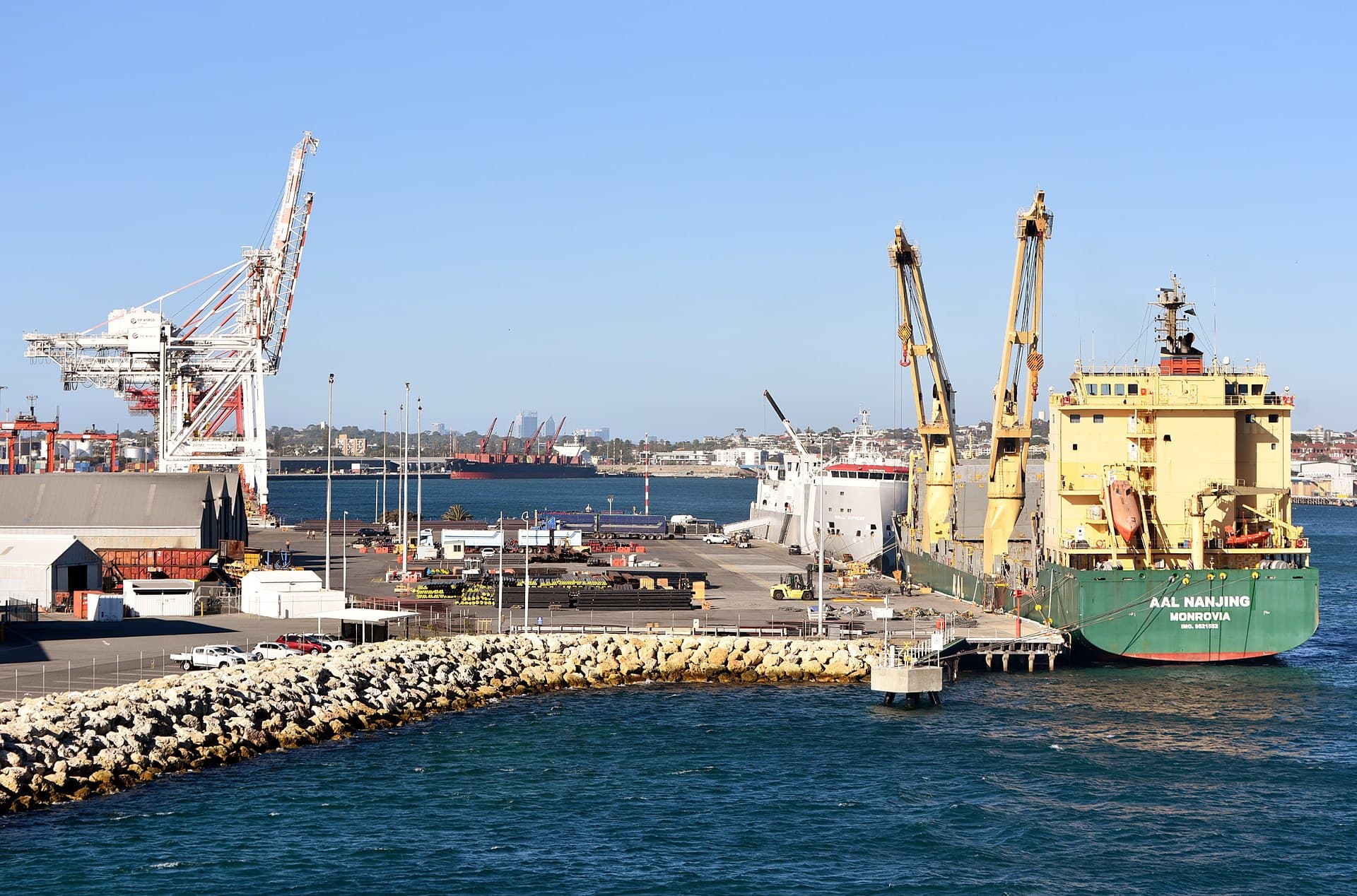
Quay faces, crane structures and corridors captured around the working day rather than inside a closure booked six months out.
Measure the rate, not the reading
Each defect compared against earlier passes of the same panel or member. A rate of change is what an engineer can act on; one photograph is not.
Hold condition per structure
Panels, members and rails carry their own history, so an assessment starts from a record instead of from a site visit.
Cover the yard and the apron
Pavement, drainage, rail-mounted crane runways and lighting across the terminal, measured at cadence rather than walked when somebody has time.
Plan around the operation
Capture scheduled into the gaps the terminal leaves, and ranked by consequence to the berth rather than by the size of the defect.
Feed the formal assessment
The structural engineer gets prior passes, extents and rates rather than a folder of photographs, which shortens the assessment rather than replacing it.
Spalling assessed from a rate of change, not a photograph
The useful number on a structure is never the single reading. It is how fast it moved since the last one, which only exists if the earlier passes were kept.
Spalling with exposed reinforcement
Berth 3 · panel 22
- extent
- 1.8 m²
- exposure
- reinforcement visible
- change since
- 2025-09
- reference
- PIANC
Structural assessment raised with prior passes attached
Two earlier captures of the same panel are attached, so the assessment starts from a rate of change rather than from one photograph.
Identifiers and values are illustrative.
How a terminal deployment starts, and then repeats
The constraint is the operation, so the sequence is designed to need as little of it as possible.
Agree access and the operating window
Which berths, which hours, and the safety case for capture around live equipment. Read-only into crane and terminal systems where duty cycles matter.
Baseline the structures
Quay panels, crane members and the corridor, captured and identified. Without this first pass there is no rate, and the rate is the point.
Run the cycle
Quay annually above water, cranes annually and after impact, corridor twice a year. Every pass is comparable with the last because the identifiers do not move.
Widen into planning
Scheduling and ranking are where limits usually open. Structural assessment stays with your engineer, and we are not trying to change that.
What lands on your side after a cycle
Built for the structural assessment and the capital plan, which are the two decisions this data actually feeds.
Structure condition record
Quay panels, crane members and rails captured, identified and dated, comparable pass to pass.
Web viewer · CSV
Rate of change per defect
Extent and exposure against earlier passes, which is what an assessment starts from.
CSV · API
Corridor condition
Track, drainage, embankment and vegetation measured along the linear asset.
GeoJSON · CSV
Prioritised work plan
Ranked by consequence to the berth and the crane rather than by defect size.
CSV · O-OPS
Assessment pack
Prior passes, extents and rates assembled for your structural engineer.
PDF · bundle
Capital planning input
Deterioration trends per structure, which is the form a capital case is actually argued in.
CSV · report
Below the waterline is not ours. Dive and ROV findings belong in the same record so the structure has one history rather than two, and we will hold them for you without pretending we captured them.
How often, and what for
Set by what the operation will allow rather than by what the engineer would prefer, which is precisely why capture that does not need a closure changes the arithmetic.
- Quay and berthsTypical cadenceAnnually above water, on condition belowWhat the pass looks forSpalling, corrosion, scour, fender and bollard conditionReferencePIANC
- Cranes and railsTypical cadenceAnnually, plus after impactWhat the pass looks forStructural cracking, rail alignment and wear, coatingReferenceISO 55001
- Fenders and mooringTypical cadenceAnnually, plus after impactWhat the pass looks forFender panel, chain and rubber condition, bollard and hook corrosion, fixingsReferencePIANC · manufacturer
- Yard and pavementTypical cadenceAnnuallyWhat the pass looks forSurface condition, markings, drainage, lightingReferenceISO 55001
These intervals are the starting points the standards describe, not a measured result of ours. Insurers, warranty terms and your own history will move them, and the point of planning from condition is that the interval stops being the thing that decides.
All four modules, on a terminal
The value here is almost entirely in versioning. A structural finding without a previous pass to compare against is an opinion.
Detect
Captures quay faces, crane structures and corridors without taking the asset out of service.
Leaves behind
Quay, crane and corridor captures, identified per structure and comparable pass to pass.
Analyse
Reads crane and terminal system telemetry, so structural findings sit beside actual duty cycles.
Leaves behind
Crane and terminal telemetry, so structural findings sit beside actual duty cycles.
Operations
Holds structure records, previous assessments and the maintenance history per berth and per crane.
Leaves behind
Structure records, previous assessments and maintenance history per berth and crane.
Decide & act
Plans capture around the operation rather than around a calendar, and ranks by consequence.
Leaves behind
Capture planning around the operation, and ranking by consequence rather than size.
- 01O-EYEDetectInspection & digital twin
- 02O-ARCAnalyseSensors, IoT & telemetry
- 03O-OPSOperationsThe system of record
- 04actsO-AGENTDecide & actThe agentic layer
Every action writes back to the record, so the model sharpens with every job.
Questions from this sector
Can you inspect below the waterline?
No. Aerial capture stops at the waterline and we are not going to imply otherwise. Underwater inspection stays a dive or ROV job, and its findings belong in the same record so the structure has one history rather than two.
Can this be done without stopping the terminal?
That is most of the reason to do it this way. Capture is planned around the operation, and the parts that genuinely need a closure are far fewer once a routine condition record exists.
Does it work on rail as well as port?
The corridor capture is the same operation: geometry, drainage, embankment and vegetation along a linear asset. Track geometry to measurement standards remains a track-recording job, and the platform holds those results rather than replacing them.
What standards do you report against?
Whatever your regime uses. We hold the finding, the evidence and the assessment; the classification follows PIANC, EN or your own asset standard depending on what you are audited against.