
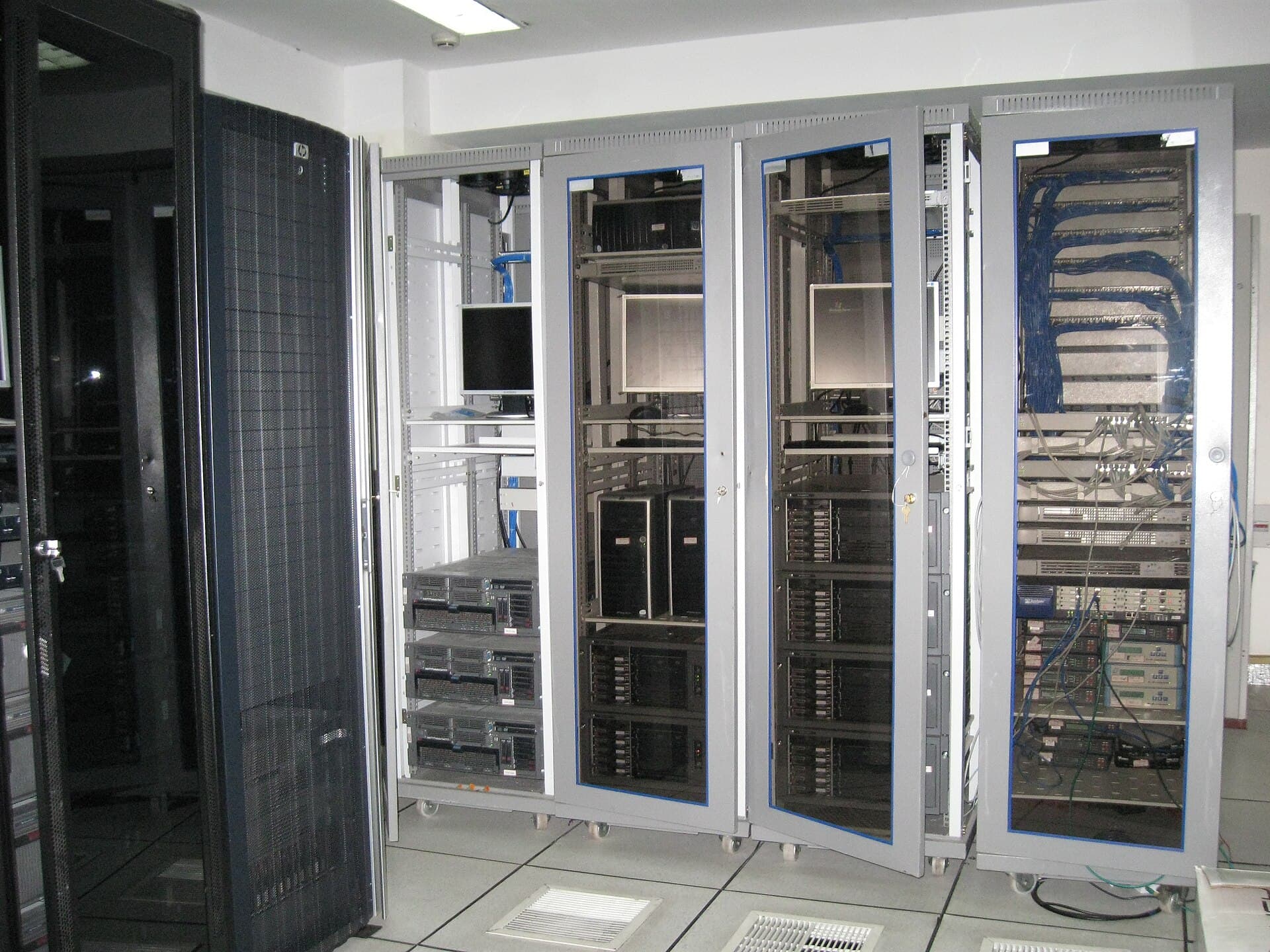
Data centres
Commissioning evidence, equipment verification and thermal survey across build and operate, where downtime is measured in minutes.
The building is commissioned once and lived in for twenty years
A data centre is the most instrumented building anyone constructs and the least documented afterwards. Commissioning produces a mountain of evidence that lands in a folder structure, the as-builts diverge on the first change, and by the second capacity expansion nobody can say with confidence what sits behind a given wall or which breaker feeds which rack.
Four failure modes, and what each one costs you late
Two of these are thermal and two are documentary. The documentary ones are the reason the thermal ones take three days to diagnose.
Thermal anomalies in the power train
- How it shows
- A rise at a breaker, busway joint or transformer under load
- What it costs late
- Unplanned outage, in the one building where that is the whole product
- What catches it
- Thermal survey attached to the equipment, with load from the BMS so the reading means something
Commissioning evidence gaps
- How it shows
- Tests recorded, evidence filed somewhere else entirely
- What it costs late
- Found at handover or, worse, at the first audit
- What catches it
- Evidence attached to the asset as it is captured, with what is missing visible on the day
Roof and envelope condition
- How it shows
- Ponding, membrane damage, flashing failure, blocked drainage
- What it costs late
- Water above a data hall is the failure nobody budgets for
- What catches it
- Aerial capture of roofs and plant decks that nobody otherwise walks
Capacity and change drift
- How it shows
- As-builts diverging from what is actually installed
- What it costs late
- Every expansion starts with a survey that should not have been necessary
- What catches it
- A versioned record updated by capture rather than by somebody remembering to redraw
Severity here is how we rank the class by default, not a judgement about your site. Every threshold is set per deployment, and a mode you consider routine can be dropped down the ranking on day one.
Six things the layer runs in a facility
Two of these are thermal and four are documentary, which is the right ratio: the documentary gaps are why the thermal problems take three days to diagnose.
Survey the power train
Breakers, busway joints and transformers captured on a cycle, attached to the equipment rather than to a room.
Attach load from the BMS
Every thermal reading carries the load it was taken under, pulled from your building or power monitoring system.
Capture commissioning evidence in place
Tests, readings and photographs attached to the asset as they are taken, with what is still missing visible on the day rather than at handover.
Keep the register true through change
As-builts updated by capture rather than by somebody remembering to redraw, so the second expansion does not begin with a survey.
Cover roofs and plant decks
The surfaces nobody walks, captured from the air and versioned, because water above a data hall is the failure nobody budgets for.
Escalate anything in the power train
Criticality-aware ranking, and a hard limit: findings on the power train go to a person with the evidence assembled, never to an automatic action.
A busway joint running hot, escalated the same hour
Anything inside the power train is above the autonomy limit by default, in the one building where an unplanned outage is the entire product.
Busway joint running hot
DH-2 · busway B · tap 14
- delta T
- 26 K
- load at capture
- 68% rated
- phase
- B
- standard
- NFPA 70B
Escalated to the critical facility lead
Power train work is above the autonomy limit by default. The finding went with the thermal frame, the load at capture and the two comparable taps.
Identifiers and values are illustrative.
How a facility deployment starts, and then repeats
Access governs everything here, so the sequence is built around your process rather than ours.
Connect the building systems
Read-only into BMS and power monitoring for load context, and into DCIM where you hold one. Your access process governs anything physical, not ours.
Baseline the equipment register
What is actually installed, where, and on which feed. This is the step that pays for itself at the next expansion.
Run thermal and change capture
Power train thermal twice a year, roofs annually, and capture on change in the white space. The register updates from capture rather than from memory.
Widen everywhere except the power train
Reporting, register updates and roof work are normal places to open limits. The power train is not, and we would not ask you to.
What lands on your side
Written for the handover conversation and the audit, which in this sector are the same conversation two years apart.
Equipment register
What is installed, where, on which feed, updated by capture rather than by redraw.
API · DCIM · CSV
Thermal findings with load
Power train anomalies carrying the load at capture and the comparable taps.
CSV · API
Commissioning evidence
Tests and readings attached to the asset, with the gaps visible while there is still a crew on site.
Bundle · PDF
Escalations, assembled
Power train findings prepared for a critical facility lead rather than actioned.
O-AGENT · email
Roof and envelope record
Plant decks and membranes captured and versioned, so change is visible before it is water.
Web viewer · CSV
Audit-ready compliance pack
Inspection coverage and evidence in the form your auditor and your client ask for.
PDF · CSV
The register is the output that compounds. Everything else is a pass; the register is the thing that stops being wrong.
How often, and what for
Driven by change as much as by calendar. In a facility that expands every quarter, the record ages faster than the equipment.
- White spaceTypical cadenceOn change, plus annuallyWhat the pass looks forRack occupancy, containment integrity, blanking, cable managementReferenceASHRAE TC 9.9
- Power trainTypical cadenceThermal twice a yearWhat the pass looks forBreaker, busway and transformer hotspots, connection conditionReferenceNFPA 70B
- Cooling plantTypical cadenceThermal twice a year, RGB annuallyWhat the pass looks forChiller and CRAH condition, leaks, coil fouling, fan conditionReferenceManufacturer
- Roof and envelopeTypical cadenceAnnually, plus after severe weatherWhat the pass looks forPonding, membrane damage, flashing, drainage, plant deck conditionReferenceISO 55001
These intervals are the starting points the standards describe, not a measured result of ours. Insurers, warranty terms and your own history will move them, and the point of planning from condition is that the interval stops being the thing that decides.
All four modules, in a facility
The strongest join in this sector is between the commissioning evidence and the operational record, because they are usually two systems describing the same equipment.
Detect
Surveys plant decks, roofs and the site, and captures commissioning evidence against the equipment.
Leaves behind
Plant deck, roof and equipment captures, with commissioning evidence attached to assets.
Analyse
Reads BMS and power monitoring, so a thermal reading carries the load that makes it meaningful.
Leaves behind
BMS and power monitoring, so every thermal reading carries the load that makes it mean something.
Operations
Holds the equipment register, commissioning evidence, certificates and change history.
Leaves behind
The equipment register, certificates, commissioning evidence and change history.
Decide & act
Ranks findings against the criticality of what they sit on, and escalates anything in the power train.
Leaves behind
Criticality-aware ranking, and the escalation record for anything in the power train.
- 01O-EYEDetectInspection & digital twin
- 02O-ARCAnalyseSensors, IoT & telemetry
- 03O-OPSOperationsThe system of record
- 04actsO-AGENTDecide & actThe agentic layer
Every action writes back to the record, so the model sharpens with every job.
Questions from this sector
Can you fly inside a data hall?
Generally no, and we would not push for it. Interior capture is handheld or fixed, and the value in a live hall is in the record rather than in the aircraft. Aerial capture is for roofs, plant decks and the site.
Do you integrate with our DCIM?
Where it exposes an API or a database, yes, and direction is configured per object type. The asset register is the natural join, so DCIM stays your system of record if you want it to.
What about physical security and access?
Anything on site follows your access process rather than ours. For a facility that cannot host external capture at all, the platform still runs on your own evidence and telemetry, with that limitation stated rather than worked around.
Is this useful during build or only in operation?
Both, and the build is where the leverage is. Commissioning evidence collected against the equipment during construction is what makes the operational record trustworthy on day one.