
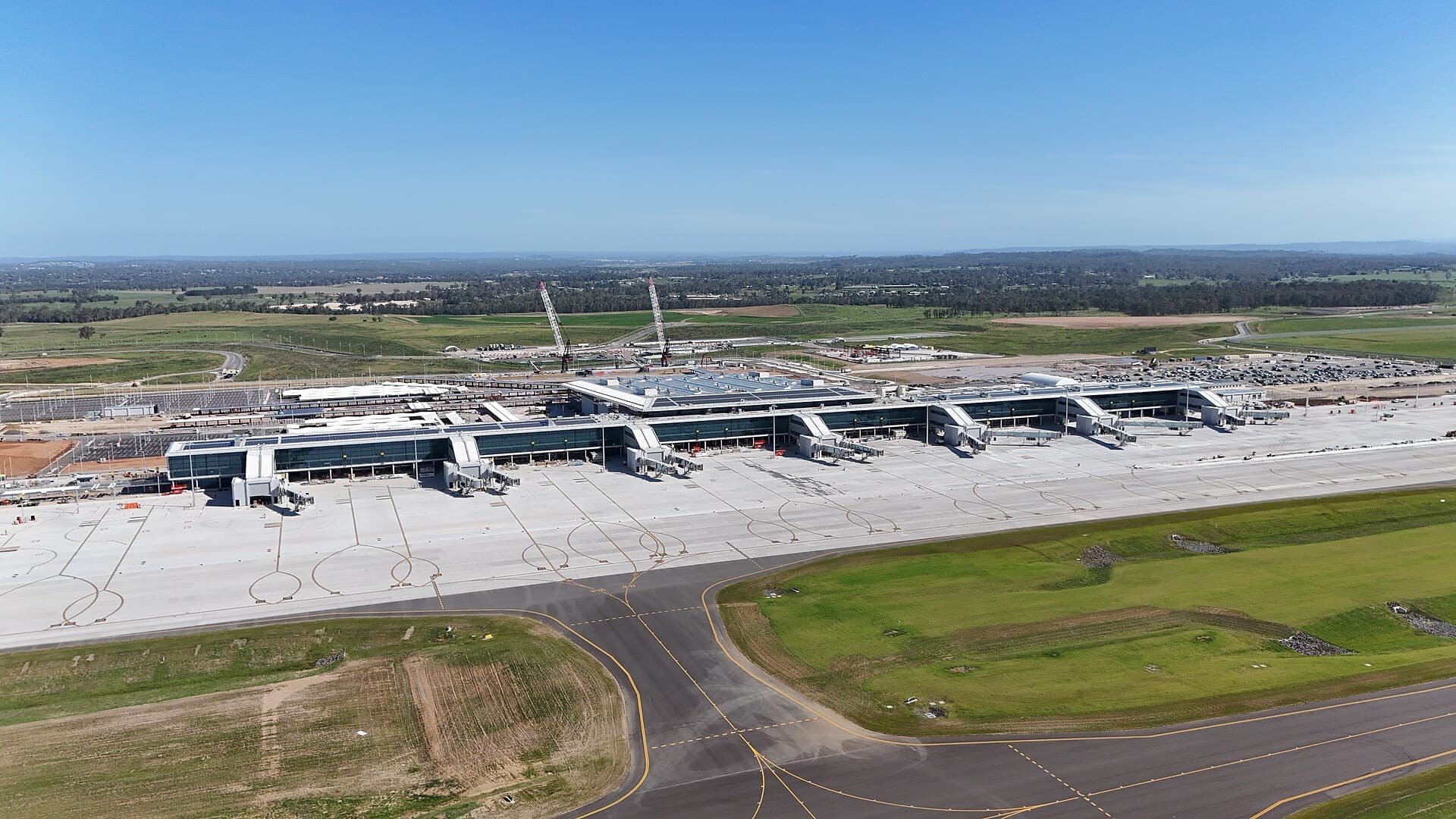
Airports
Pavement condition, terminal roofs, airfield lighting and perimeter inspected around live operations, where taking a runway out of service is measured in lost slots.
Inspection has to fit between movements
Airside inspection competes with the movement schedule, so pavement gets walked or driven on a cycle that suits operations rather than deterioration, and roofs, lighting and perimeter get looked at when there is time. The failures that matter are the ones that put something on a runway or take a stand out of service.
Four failure modes, and what each one costs you late
Airside is the sector where consequence and size are least correlated. A metre of failed sealant outranks a large area of cosmetic cracking.
Pavement distress
- How it shows
- Cracking, spalling, rutting and joint failure on runways, taxiways and stands
- What it costs late
- Progresses to debris generation and eventually to closure for repair
- What catches it
- Capture at pavement resolution, classified per slab and tracked pass to pass
Debris generation risk
- How it shows
- Loose material, joint sealant failure, edge break-up
- What it costs late
- The consequence is an aircraft, which is why the tolerance is zero
- What catches it
- Surfaced from the same pavement capture and ranked ahead of cosmetic distress
Airfield ground lighting
- How it shows
- Failed or misaligned fittings, damaged bases, degraded output
- What it costs late
- Serviceability limits under low visibility procedures
- What catches it
- Capture attached to the fitting rather than to a section, checked against the lighting system
Terminal roofs and structures
- How it shows
- Ponding, membrane damage, blocked drainage, plant condition
- What it costs late
- Water into a live terminal, and works planned around passengers
- What catches it
- Aerial capture of roofs nobody otherwise walks, versioned so change is visible
Severity here is how we rank the class by default, not a judgement about your site. Every threshold is set per deployment, and a mode you consider routine can be dropped down the ranking on day one.
Six things the layer runs airside
The ranking function is the one that matters most here, because the airside backlog is never short of things that look worse than the thing that counts.
Classify pavement per slab
Cracking, spalling, joint condition and rutting attached to individual slabs rather than to a section of taxiway.
Rank by consequence, not size
A metre of failed sealant that generates debris outranks a large area of cosmetic cracking. The ordering is the product, not a nicety.
Verify lighting against the system
Fittings captured and checked against what the lighting system reports, so a failure is confirmed rather than assumed.
Plan into the movement schedule
Capture fitted into published closures and the gaps operations already leaves, rather than requesting new ones.
Cover terminal roofs and perimeter
The surfaces that get looked at when there is time, captured on a cycle and versioned so change is visible.
Feed the formal survey
An annual condition history per slab makes the certified pavement survey shorter, without pretending to replace it.
A small finding ranked above a larger one
Consequence, not size. Sealant loss over 42 metres outranked a bigger area of cosmetic distress because the failure mode generates foreign object debris.
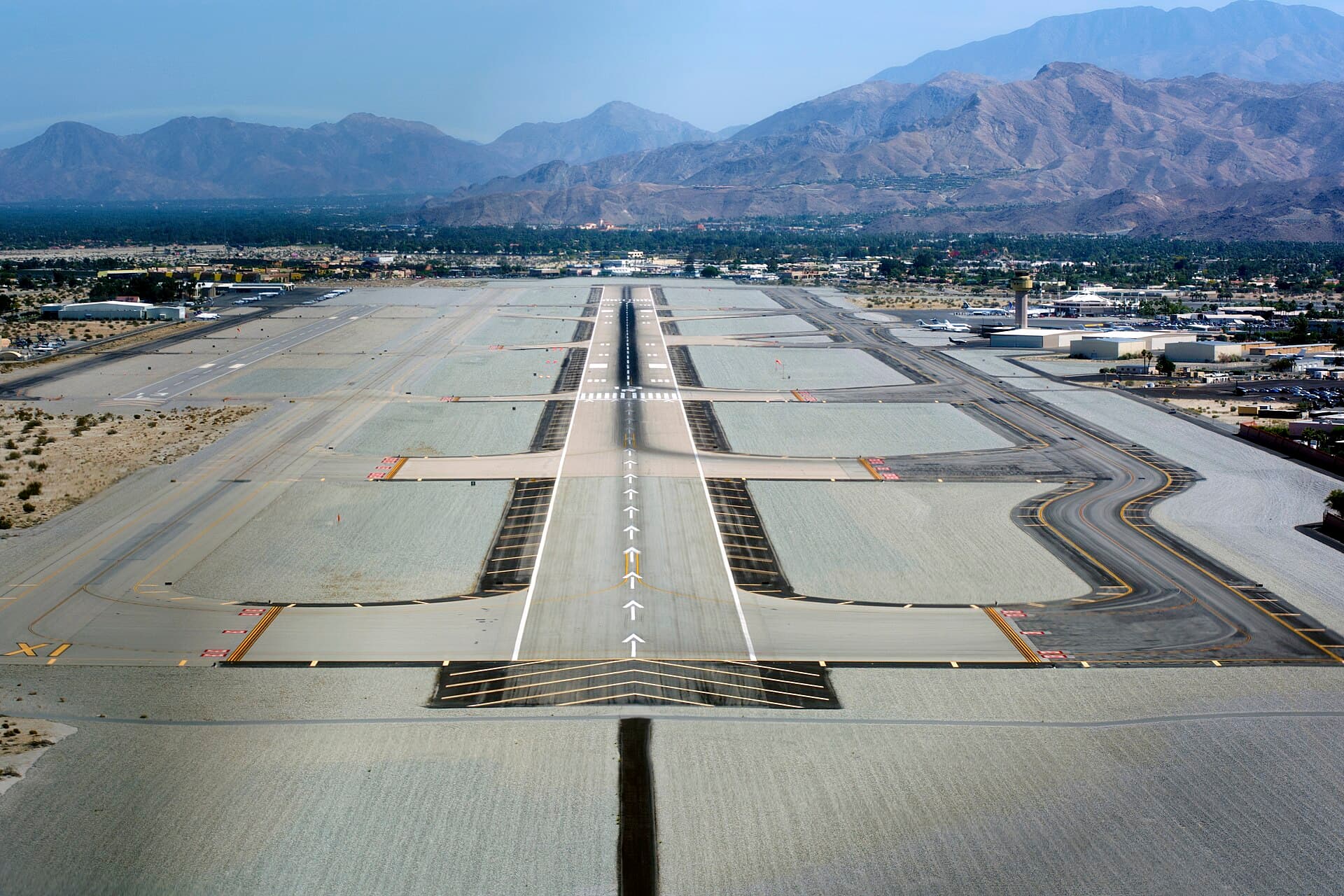
Joint sealant failure, taxiway B
TWY B · slab 214
- extent
- 42 m
- classification
- sealant loss
- change since
- 2025-11
- reference
- FAA AC 150/5380-7
Raised ahead of larger cosmetic distress
Ranked above bigger but lower-consequence findings because the failure mode generates debris. The window was matched to a published closure rather than requested as a new one.
Identifiers and values are illustrative.
How an airside deployment starts, and then repeats
Everything here runs under your permit and your procedures. There is no version of this where the aircraft surprises the tower.
Work through the permit
Airside permit, procedures and coordination with air traffic control, in windows your operations team sets. Read-only into lighting and building systems where they exist.
Baseline the pavement
Runways, taxiways and stands captured and identified per slab. This is the record every later comparison and every ranking depends on.
Run annually and after events
Pavement annually plus after any event, lighting annually, perimeter twice a year. Findings arrive ranked by consequence and matched to published closures.
Widen into scheduling
Matching work to closures is usually the first limit opened, because the decision is bounded and reversible. Anything touching movement areas stays with your team.
What lands on your side
Written for the person defending an airside capital plan and the person deciding what gets done in tonight's closure.
Pavement condition per slab
Distress classified and dated at slab level across runways, taxiways and stands.
GeoJSON · CSV
Consequence-ranked worklist
Ordered by what the failure mode actually causes, with debris risk ahead of cosmetic distress.
CSV · O-OPS
Lighting verification
Fittings captured and reconciled against what the lighting system reports.
CSV · API
Work matched to closures
Findings fitted to published windows rather than requesting new ones.
O-AGENT · CSV
Roof and perimeter record
Terminal roofs, plant decks and the perimeter captured and versioned.
Web viewer · CSV
Survey and audit input
Condition history per slab feeding the certified survey and your regulator's evidence.
PDF · CSV
A certified pavement condition survey is still a certified survey. What changes is that you have a year-on-year history per slab going into it, which makes it shorter and makes the argument between surveys possible.
How often, and what for
Anchored to ICAO and FAA guidance, and constrained by the movement schedule more than by the engineering.
- Runways and taxiwaysTypical cadenceAnnually, plus after an eventWhat the pass looks forCracking, spalling, joint condition, rutting, markingsReferenceFAA AC 150/5380-7
- Airfield lightingTypical cadenceAnnuallyWhat the pass looks forFitting condition, alignment, base and cable conditionReferenceICAO Annex 14
- Terminal and roofsTypical cadenceAnnuallyWhat the pass looks forMembrane, ponding, drainage, plant deck, facade conditionReferenceISO 55001
- Perimeter and airside civilsTypical cadenceTwice a yearWhat the pass looks forFence condition, drainage, vegetation, access roadsReferenceICAO Annex 17
These intervals are the starting points the standards describe, not a measured result of ours. Insurers, warranty terms and your own history will move them, and the point of planning from condition is that the interval stops being the thing that decides.
All four modules, airside
Ranking is where the layer earns its place here, because the airside backlog is never short of things that look worse than the thing that matters.
Detect
Captures pavement, lighting, roofs and perimeter between movements, at the resolution each class needs.
Leaves behind
Pavement, lighting, roof and perimeter captures, classified per slab and per fitting.
Analyse
Reads lighting and building system telemetry, so a fitting reported failed is confirmed rather than assumed.
Leaves behind
Lighting and building system telemetry, so a fitting reported failed is confirmed.
Operations
Holds the pavement register, prior condition surveys and the works history per surface.
Leaves behind
The pavement register, prior condition surveys and works history per surface.
Decide & act
Plans capture into the gaps in the movement schedule, and ranks by consequence rather than by size.
Leaves behind
Capture planned into movement gaps, and ranking by consequence rather than size.
- 01O-EYEDetectInspection & digital twin
- 02O-ARCAnalyseSensors, IoT & telemetry
- 03O-OPSOperationsThe system of record
- 04actsO-AGENTDecide & actThe agentic layer
Every action writes back to the record, so the model sharpens with every job.
Questions from this sector
How do you fly airside?
Under your airside permit and procedures, coordinated with air traffic control, in windows your operations team sets. There is no version of this where the aircraft is a surprise to the tower.
Does it replace our pavement condition survey?
It gives you one every year instead of every few, attached to slabs rather than to sections, and it makes the formal survey shorter because the history already exists. Where a certified survey is required, that requirement does not change.
What about wildlife hazard management?
Not something we claim to address. It is a real airside programme with its own tooling, and we would rather say it is outside what we do than stretch the capture story to cover it.
Can this run at a regional airport with a small team?
That is often where the ratio is best, because the alternative is a specialist survey nobody can afford annually. The scope is smaller and so is the deployment.